

Guides
Competitive marketing strategy: a practical guide for 2027
Competitive marketing strategy for 2027 connects customer choice, lawful market evidence, positioning, proof, execution, measurement, and response controls.
What to take away
- Define the exact customer choice before tracking rivals, messages, prices, channels, or product moves.
- Use dated public evidence and direct customer research, then separate verified facts, interpretation, uncertainty, and prohibited information.
- Choose a position the complete offer can deliver, substantiate comparisons, measure downstream choice, and keep competitive conduct independent.
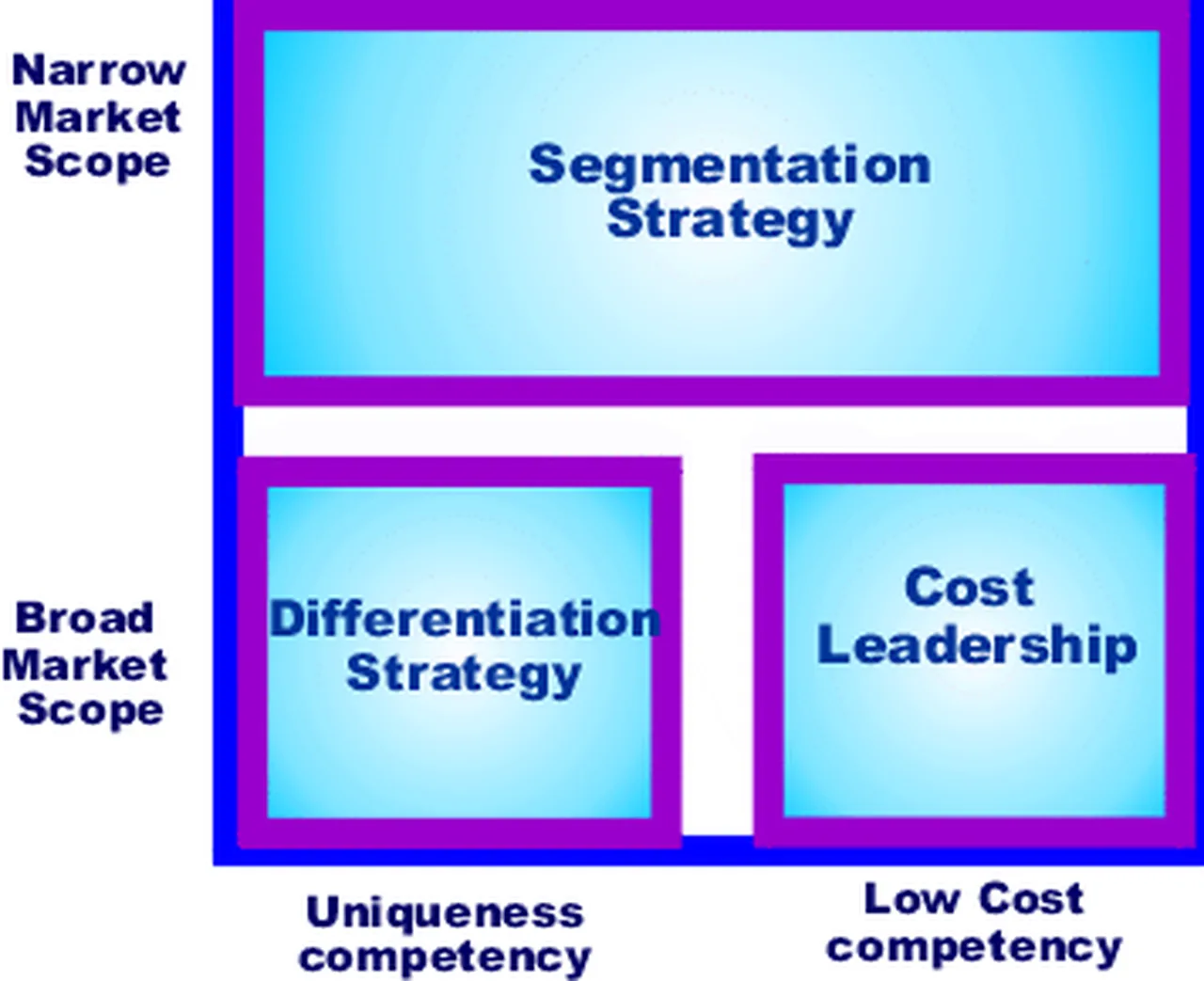
Competitive marketing strategy explains how a business will earn preference among the alternatives customers actually consider. It is not a catalog of competitor posts, a promise to copy every feature, or permission to attack another brand. The work connects customer choice, market structure, distinctive value, credible proof, offer design, communication, routes to market, and operating capability.
A useful 2027 strategy relies on dated public evidence and direct customer research. It distinguishes observation from inference, tests claims before publication, protects confidential information, and keeps pricing and other competitive decisions independent. Because advertising, competition, privacy, intellectual property, and sector rules vary, qualified local review should match the consequence.
Define the competitive decision
State the product or service, customer, job, market, geography, channel, buying situation, time horizon, decision owner, resource limit, and desired behavior. Clarify whether the strategy concerns entry, growth, retention, repositioning, a launch, a segment, or a response to verified market change. Record what is outside scope.
Start with the customer's choice
Ask what progress the customer wants, what triggers action, who participates, what proof matters, what creates delay, and what total adoption cost exists. Include active buyers, recent wins and losses, renewals, former customers, assisted buyers, and relevant noncustomers. Document recruitment, wording, dates, missing groups, contradictions, and limits.
The U.S. Small Business Administration separates competitive analysis from broader market research and recommends examining market share, strengths, weaknesses, barriers, windows of opportunity, and indirect competitors. Use that structure as a prompt, then adapt it to the actual customer decision and market.
Map alternatives, not just familiar brands
Public employer data can add market-structure context without identifying individual rivals. The Bureau of Labor Statistics' Quarterly Census of Employment and Wages overview documents establishment, employment, and wage data by detailed industry and geography, together with coverage, publication timing, and confidentiality limits. Use the correct period and classification, then verify current customer alternatives directly.
Customers may choose a direct rival, an internal process, a general tool, a specialist, a reseller, a marketplace, a workaround, delay, or doing nothing. Map alternatives by job and buying situation. Distinguish category competitors from brands that appear only in a narrow segment, region, route, or use case.
Build a lawful evidence base
Use public websites, product documentation, price pages, help centers, demonstrations, app listings, public filings, job postings, patents, reviews, customer interviews, sales records, and your own transaction data where lawful and relevant. Keep the original URL or file, observation date, market, access conditions, and exact passage behind every material entry.
Do not misrepresent identity, solicit trade secrets, bypass access controls, reuse personal data without a valid basis, or accept improperly shared confidential material. Escalate uncertainty. Competitor employees, partners, customers, events, and trade associations require clear conduct rules and training.
Separate facts, interpretations, and unknowns
A visible price, stated feature, published integration, and filed financial result may be observable facts within a defined date and market. Motive, profitability, satisfaction, roadmap, and strategic intent are usually interpretations unless reliable evidence supports them. Label confidence, counterevidence, and freshness instead of filling gaps with certainty.
Segment competitive conditions
Competition often differs by customer need, company size, risk tolerance, maturity, location, channel, budget, urgency, switching cost, and required support. Build segments only when evidence shows a meaningful difference and the business can act on it. Avoid stereotypes and proxy attributes that create unfair or unlawful treatment.
Choose a defensible position
Define the customer, need, frame of reference, promised benefit, proof, and reason the organization can keep delivering it. Useful positions may emphasize specialized outcomes, ease, speed, control, compatibility, service, reliability, access, total cost, or a distinctive combination. The choice should force priorities rather than claim superiority on every dimension.
Design a value and tradeoff map
For each important decision criterion, record customer importance, current perception, verified performance, evidence quality, competitor alternative, operating requirement, and tradeoff. Decide what to lead, match, simplify, partner for, or deliberately decline. A credible strategy says who will prefer another option and why.
Connect position to the offer
Translate the choice into product, service, package, price metric, terms, onboarding, support, proof, availability, channel, and experience. If the offer cannot deliver the position consistently, rewrite the position or change the operation. Marketing language should not carry an unsupported promise that product and service teams cannot reproduce.
Create a comparative claim register
List every express and implied claim about performance, price, features, safety, results, preference, availability, or another brand. Record the exact wording, reasonable interpretations, audience, market, comparison basis, method, date, limitations, evidence owner, approval, expiry, and monitoring. Test the full impression created by words, images, charts, demonstrations, and omissions.
The FTC says advertising must be truthful and non-deceptive, supported by evidence, and not unfair. Its comparative-advertising policy supports truthful comparisons where the basis is clearly identified. These U.S. sources do not replace current local or sector-specific advice, especially for health, safety, finance, children, environment, or other consequential claims.
Build messages from proof
Create a message hierarchy that connects customer problem, distinctive benefit, mechanism, evidence, qualification, and next step. Prepare versions for awareness, evaluation, procurement, onboarding, renewal, and recovery. Give sales and service teams approved comparison language, source access, escalation routes, and a way to report new objections.
Choose routes where the advantage matters
Map discovery, education, evaluation, trial, purchase, implementation, use, support, and renewal. Select search, content, communities, partners, marketplaces, events, sales, customer success, and other routes based on customer behavior and delivery capability. Do not imitate a rival's channel mix without understanding economics, audience, and operating demands.
Design useful competitive content
Content may explain a category, buying criteria, implementation, alternatives, migrations, integrations, total cost, common failures, or verifiable comparisons. Update dates and methods. Give readers enough detail to judge fit, including limitations and cases where another approach is reasonable. Editorial usefulness should lead; a competitor keyword alone is not a content strategy.
Test without harming customers
Predefine the decision, audience, comparison, assignment, primary outcome, guardrails, sample, duration, contamination, stop rule, and causal limitations. Review exposure, accessibility, privacy, complaints, support burden, and downstream customer outcomes. Preserve neutral variants and failed tests so only favorable results are not selectively reported.
Prepare response protocols
Set triggers for verified changes in competitor offers, customer objections, market access, regulation, reputation, supply, or technology. Define who verifies the signal, who decides, what actions are permitted, what evidence is required, and when to review. Avoid reactive price moves, public accusations, or roadmap changes based on a screenshot without context.
Assess market structure and route power
Study how customers discover and compare options, who controls distribution, which standards or integrations affect access, how switching occurs, and where trust is concentrated. Review suppliers, platforms, marketplaces, resellers, professional advisers, procurement rules, and complementary products. A strong customer benefit may still fail if the business cannot reach buyers, pass required evaluation, or deliver through the chosen route. Mark structural observations by market and date because access conditions can change.
Plan for uncertainty with scenarios
Build a small set of plausible scenarios around demand, customer criteria, competitor entry, price pressure, channel access, supply, technology, and regulation. For each one, identify leading signals, exposed assumptions, customer effects, financial range, operational constraints, permitted actions, stop conditions, and review owner. Scenarios are not forecasts to defend. They help teams act deliberately when evidence changes while preserving the original strategy until a defined threshold is met.
Protect independent competitive conduct
The FTC states that each company generally must establish prices and competitive terms independently, without agreement with a competitor. Create guidance for trade events, associations, partner meetings, benchmarking, hiring, inbound competitor information, and messages about price, customers, capacity, bids, territories, output, and future plans. Seek antitrust counsel for uncertainty.
Measure the intended choice
Track qualified discovery, consideration, message comprehension, evaluation progress, win and loss reasons, time to decision, realized price, activation, adoption, retention, expansion, complaints, support, and contribution. Segment only with adequate data. Reconcile marketing, sales, product, service, finance, and customer evidence before attributing movement to the strategy.
Use a practical 2027 workflow
- Define the customer choice, market, objective, owner, constraints, evidence standard, and prohibited conduct.
- Research customers, direct and indirect alternatives, market structure, buying criteria, and operating realities.
- Create a dated source log that separates observed facts, interpretations, confidence, contradictions, and unknowns.
- Select a defensible position, explicit tradeoffs, required offer changes, and a proof plan.
- Build offers, claims, messages, content, channels, sales guidance, service behavior, and operating support around that choice.
- Review substantiation, privacy, intellectual property, competition, accessibility, and sector obligations with qualified specialists.
- Pilot with defined outcomes and guardrails, then monitor customer, commercial, operating, and conduct evidence.
- Preserve versions and decisions, refresh time-sensitive evidence, correct errors, and retire obsolete claims and materials.
Strong competitive strategy makes the business easier to choose for a defined customer and reason. It replaces imitation with a deliberate position, replaces rumor with traceable evidence, and replaces unsupported superiority with proof. The result should guide product, service, sales, marketing, and operations while respecting customers and the competitive process.
Competitive decision record
| Decision layer | Evidence | Control |
|---|---|---|
| Customer choice | Job, situation, alternatives | Defined boundary |
| Position | Benefit, tradeoff, proof | Delivery test |
| Comparison | Current like-for-like facts | Claim review |
| Response | Trigger, scenario, outcome | Independent approval |
Verify competitive marketing strategy before release
For competitive marketing strategy, the GAO evaluation design guide explains how evaluation questions, evidence needs, and design choices fit together. The guide is written for federal program evaluation. Use its design discipline as a check on the method, not as proof that a marketing result is causal or transferable.
The W3C Privacy Principles statement gives system designers a shared vocabulary for privacy and warns against shifting privacy work onto individuals. Apply that principle to the data flow behind competitive marketing strategy. It does not replace the law, contract terms, consent analysis, or a review of the actual configuration.
The GOV.UK technology selection guidance recommends choices that can change over time, preserve data control, address security risk, and include ownership cost. Those public-service rules become useful buying questions for competitive marketing strategy, but they are not private-sector mandates or product endorsements.
Apply these checks to the actual competitive marketing strategy workflow. Record the tested data, roles, product versions, exceptions, and approval date. Repeat the review after a material source, model, access, contract, or decision change. The added sources define separate evaluation, privacy, and operating questions; none certifies the local implementation or supplies a guaranteed marketing result.
Common questions
What is a competitive marketing strategy?
It is a coordinated choice about customers, alternatives, position, offer, proof, routes, measurement, and lawful responses to changing market evidence.
Should strategy begin with a competitor list?
No. Begin with a defined customer decision, then identify every realistic alternative, including delay, internal work, substitutes, and doing nothing.
How often should competitive evidence be refreshed?
Set a cadence by decision risk and add event-driven review when offers, terms, channels, technology, regulation, customer behavior, or market structure changes materially.