

Guides
Growth marketing strategy: a practical guide for 2027
Growth marketing strategy for 2027 connects customer value, lifecycle constraints, experiments, sustainable economics, capacity, evidence, and governance.
What to take away
- Start with one defined customer outcome and a reconciled lifecycle baseline, then diagnose the constraint before choosing a tactic.
- Test a stated mechanism with a primary outcome, guardrails, maturity window, stop rule, and honest record of neutral or negative evidence.
- Scale only when downstream value, economics, operating capacity, customer treatment, claims, accessibility, privacy, and rollback are ready.
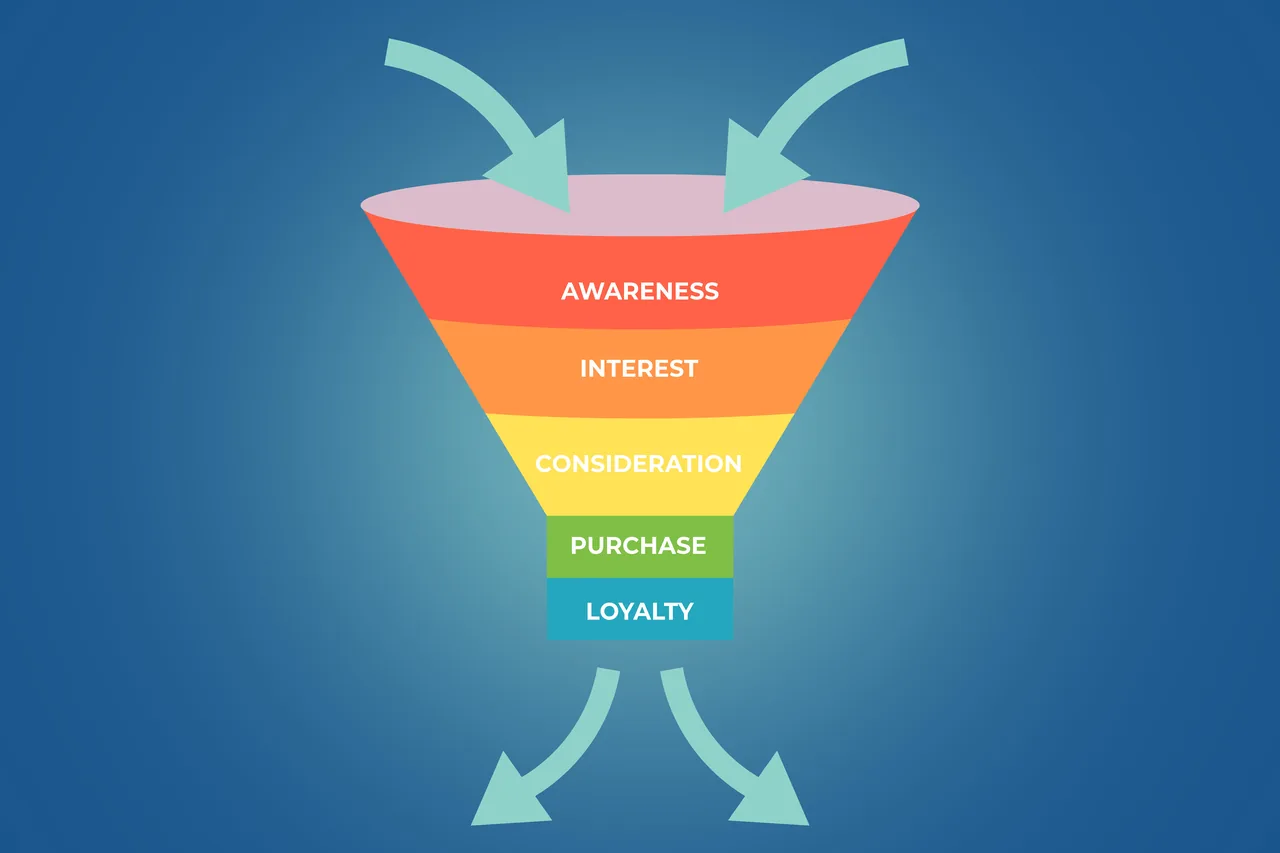
Growth marketing strategy is a coordinated plan for improving how suitable customers discover, evaluate, adopt, use, retain, recommend, and pay for an offer. It is not a list of rapid experiments or a synonym for paid acquisition. The strategy connects customer value, product and service behavior, distribution, evidence, economics, data, operating capacity, and responsible decision rights.
A practical 2027 approach begins with a defined growth problem and reliable baseline. It finds the most consequential constraint, forms a testable explanation, changes the smallest coherent part of the system, monitors customer and business effects, and preserves what was learned. Claims, endorsements, privacy, accessibility, contracts, and sector obligations need review appropriate to the risk and market.
Define the growth decision
Specify the offer, suitable customer, job, market, lifecycle stage, behavior, time horizon, owner, resource limit, and decision deadline. Clarify whether the problem is discovery, qualification, evaluation, activation, repeat use, retention, expansion, referral, or monetization. Record excluded populations, prohibited tactics, and customer guardrails.
Draw the customer lifecycle as experienced
Map trigger, discovery, education, evaluation, trial, purchase, onboarding, first value, repeated value, support, renewal, expansion, referral, cancellation, and recovery. Include offline, partner, sales, service, and product interactions. Mark waits, handoffs, required data, decisions, failure paths, and moments where a customer can leave or ask for help.
Establish a trustworthy baseline
Define eligible population, event, source, identity rule, window, exclusions, time zone, currency, refund treatment, maturity, and owner for each measure. Reconcile analytics with product, commerce, CRM, billing, support, and finance. Inspect missing events, duplicate records, consent loss, bot traffic, offline activity, and historical definition changes before diagnosing performance.
Research customers behind the numbers
Study customer jobs, triggers, alternatives, proof, effort, risk, access, budget, buying authority, onboarding, value moments, setbacks, support, and exit. Combine interviews, observation, surveys, search and sales evidence, product behavior, service records, transactions, complaints, cancellations, and noncustomer research. Document method, sample, dates, missing voices, contradictions, and limits.
The U.S. Small Business Administration recommends combining existing information with direct research for market and competitive analysis. That general guidance supports triangulation, but a business still must design methods for its exact decision and avoid treating a convenient sample as the entire market.
Build a growth model
A cohort view can expose timing and retention patterns that aggregate totals conceal. Google's GA4 cohort exploration documentation explains inclusion and return criteria, daily through monthly granularity, standard, rolling, and cumulative calculations, and device-data limits. Preserve those definitions and reconcile important measures with operational and financial records.
Connect eligible audience, qualified discovery, evaluation, activation, retained use, expansion, referral, revenue, cost, capacity, and contribution. Show counts, rates, time delays, recurrence, and uncertainty. Separate one-time cohorts from recurring behavior. A model should explain how value and cash develop, not merely arrange familiar funnel labels.
Find the active constraint
Look for the step where customer value, evidence, capacity, or economics most limits the desired outcome. Compare segments and cohorts only when definitions and sample allow. Investigate instrumentation, seasonality, selection, channel mix, product changes, service incidents, pricing, and maturity before declaring a bottleneck.
Write a testable growth thesis
State the observed problem, affected customer, evidence, proposed mechanism, intervention, expected behavior, primary outcome, guardrails, time window, and conditions that would change the decision. Include alternative explanations. A thesis should be falsifiable and useful even when the expected result does not occur.
Fix value before adding reach
If suitable customers cannot understand, start, receive, or repeat value, additional acquisition can magnify confusion and service load. Improve the offer, expectation, onboarding, reliability, support, accessibility, and recovery first. Verify that marketing claims match ordinary product and service experience across relevant customers.
Design experiments with decision rules
Predefine eligibility, unit of assignment, exposure, comparison, primary outcome, guardrails, sample assumptions, duration, maturity, contamination, stop rule, analysis, and causal limitations. Review privacy, accessibility, fairness, customer harm, and operational burden. Preserve neutral and negative tests and avoid repeated slicing until a favorable answer appears.
Build a balanced acquisition portfolio
Evaluate search, content, creators, communities, partnerships, referrals, marketplaces, sales, events, product-led routes, paid media, and other channels by customer behavior, incrementality, cost, time, control, concentration, capacity, and downstream quality. Avoid dependence on one platform, audience, creative pattern, or attribution convention.
Improve activation around first value
Define the customer outcome that indicates meaningful initial value, not the easiest event to track. Remove unnecessary steps, set accurate expectations, provide examples, preserve choice, make status visible, and offer timely help. Monitor completion, time, errors, assistance, abandonment, accessibility, and later retained use.
Treat retention as delivered value
Study whether customers continue receiving the promised benefit with acceptable effort, cost, reliability, and support. Segment by use case and maturity. Track repeated value, inactivity, downgrade, cancellation, complaints, recovery, and return. Do not hide cancellation, manufacture urgency, or substitute reminders for a product or service fix.
Design referrals and endorsements responsibly
A referral loop needs a genuine reason to recommend, a suitable recipient, clear incentive terms, consent, fraud controls, and reliable fulfillment. The FTC's endorsement guidance addresses material connections, reviews, and social media disclosures in the United States. Review the current rules and platform policies wherever a program operates.
Align monetization with customer value
Connect price metric, package, terms, renewal, expansion, and service cost with how customers receive and understand value. Monitor realized price, contribution, adoption, retention, complaints, billing accuracy, refunds, and access. A revenue lift caused by confusion, accidental enrollment, or unsustainable service is not healthy growth.
Understand loops without magical thinking
A growth loop has an input, customer action, value delivered, output, delay, conversion, loss, and capacity limit. Examples include collaboration, content, marketplace supply, referrals, integrations, and reusable data where lawful. Model each link and decay. A loop does not compound indefinitely, and incentives can attract low-quality or fraudulent behavior.
Use privacy-aware measurement
Collect and retain data because a defined decision needs it, not because a tool allows it. Document purpose, lawful basis where applicable, notice, choice, access, sharing, security, retention, deletion, and incident handling. NIST describes its Privacy Framework as a voluntary tool for managing privacy risk, not a substitute for applicable law.
Forecast with scenarios and capacity
Model conservative, central, and upside cases for qualified demand, activation, retention, referral, revenue, cost, cash, inventory, service, support, and system load. Include time delays and failure paths. Set triggers for hiring, spend, supply, throttling, pausing, and rollback before a campaign exceeds reliable delivery.
Create cross-functional ownership
Growth choices affect marketing, product, engineering, design, sales, service, operations, finance, data, privacy, accessibility, legal, and leadership. Define a decision owner, contributors, approvers, implementation owner, analyst, monitor, and incident contact. Small teams may combine roles but should preserve independent review for consequential claims and analysis.
Govern claims and customer treatment
The FTC says advertising must be truthful and non-deceptive, supported by evidence, and not unfair. Maintain a claim register covering wording, express and implied meaning, substantiation, audience, market, qualification, approval, expiry, and affected assets. Add rules for scarcity, defaults, incentives, reviews, creators, vulnerable customers, and complaint correction.
Manage a portfolio of growth work
Balance diagnostic research, foundational repairs, low-risk tests, larger strategic bets, measurement quality, and operating improvements. Reserve capacity for incidents and unexpected findings. Record expected customer value, evidence, affected population, effort, dependency, reversibility, risk, owner, and decision date for every item. Limit concurrent tests when they compete for the same audience, team, or outcome. A portfolio should reduce concentration and sequencing risk, not become a longer backlog of unexamined ideas.
Run a disciplined growth review
Review baseline health, research updates, active constraints, experiment exposure, mature outcomes, guardrails, economics, capacity, customer complaints, privacy incidents, and open corrections on a consistent cadence. Compare the result with the original thesis and alternative explanations. Decide explicitly to scale, revise, continue, pause, stop, or gather more evidence. Assign the next owner and date. Periodically retire metrics, segments, tools, messages, and rituals that no longer support a real decision.
Use a practical 2027 workflow
- Define the customer, lifecycle behavior, business objective, guardrails, owner, constraints, and prohibited tactics.
- Reconcile baseline definitions and data across marketing, product, sales, service, commerce, billing, and finance.
- Research customer value, effort, alternatives, access, setbacks, support, retention, referral, and exit with documented methods.
- Build a growth model, identify the active constraint, and write a falsifiable thesis with alternative explanations.
- Prioritize by expected customer value, evidence, reach, cost, capacity, reversibility, risk, and learning value.
- Design the intervention, experiment, implementation, claims, privacy controls, guardrails, stop rule, and rollback before launch.
- Monitor exposure, mature customer outcomes, operating load, economics, complaints, and unintended effects.
- Preserve decisions and results, correct errors, share learning, scale verified changes carefully, and retire obsolete tactics.
Healthy growth is the repeatable expansion of customer value and sustainable business value. It requires fewer unsupported shortcuts and more disciplined diagnosis, delivery, measurement, and revision. The strategy succeeds when teams can explain what changed, for whom, why it should work, what actually happened, and when they will stop or adapt.
Growth strategy decision record
| Decision layer | Required evidence | Control |
|---|---|---|
| Customer value | Job, lifecycle, failure | Defined suitable cohort |
| Constraint | Reconciled measures and research | Alternative explanation |
| Intervention | Mechanism, outcome, guardrails | Stop and rollback rules |
| Scale | Mature value, economics, capacity | Phased approval |
Verify growth marketing strategy before release
For growth marketing strategy, the GAO evaluation design guide explains how evaluation questions, evidence needs, and design choices fit together. The guide is written for federal program evaluation. Use its design discipline as a check on the method, not as proof that a marketing result is causal or transferable.
The W3C Privacy Principles statement gives system designers a shared vocabulary for privacy and warns against shifting privacy work onto individuals. Apply that principle to the data flow behind growth marketing strategy. It does not replace the law, contract terms, consent analysis, or a review of the actual configuration.
The GOV.UK technology selection guidance recommends choices that can change over time, preserve data control, address security risk, and include ownership cost. Those public-service rules become useful buying questions for growth marketing strategy, but they are not private-sector mandates or product endorsements.
Apply these checks to the actual growth marketing strategy workflow. Record the tested data, roles, product versions, exceptions, and approval date. Repeat the review after a material source, model, access, contract, or decision change. The added sources define separate evaluation, privacy, and operating questions; none certifies the local implementation or supplies a guaranteed marketing result.
Common questions
What is a growth marketing strategy?
It is a coordinated choice about customer value, lifecycle behavior, distribution, experiments, economics, operations, evidence, and responsible decision rights.
Does growth marketing mean running more experiments?
No. The work should diagnose a consequential constraint, choose the right research or intervention, and learn from complete customer and business outcomes.
When should a growth tactic scale?
Scale when the result is mature, reproducible, valuable to customers, economically plausible, operationally supportable, properly governed, and reversible if conditions change.